.png)
Preventative Maintenance for Older Plano Homes
Updated: Sep 30
Most homeowners don't think about the systems in their home until something stops working. And when you own an older home, it seems like something quits working more and more often as time goes on. The dryer needs two cycles, there's water under the washing machine, the HVAC isn't cooling like it used to. A strange smell appears. Even stranger noises are happening.
Sometimes, these breakdowns and repairs can't be avoided. But other times, repairs can be avoided or not be needed as frequently if a simple maintenance plan is followed.
Preventative home maintenance matters more than ever in a city like Plano, where, according to a 2025 regional development report, 96% of Plano's land within the city limits is already developed. Maintaining existing homes is becoming increasingly important the more the area gets built out. For comparison, McKinney and Frisco are about 76% and 71% developed, respectively.
Plano also has a significant amount of money tied up in its housing. The median value of owner-occupied homes is $465,900, based on 2020–2024 data from the U.S. Census Bureau.
For homeowners, the takeaway is simple: taking care of the home you already have matters. And some of the most important maintenance involves parts of your house you rarely see.
Here are our best tips for preventative maintenance for older Plano homes.
1. Check How Well Your Dryer Is Actually Drying
You might think it's just normal for a dryer's performance to decline over time. While that is true to a degree, there are other factors that can have a significant impact that you may not even be aware of. When you begin to notice changes in your laundry routine, keep a close eye on the following:
Pay attention if:
Clothes suddenly require two cycles to dry
Loads that used to dry normally remain damp
Clothes or the dryer feel unusually hot
The laundry room gets excessively warm or humid
You notice musty or burning odors
The dryer shuts off before the cycle is finished
There are several possible explanations for these symptoms, including problems with the appliance itself (like the heating element, thermal fuse, or thermostat). If a specific component of the dryer needs to be replaced, it is also important to understand the root cause of why the part may be failing.
A commonly overlooked cause of dryer problems is restricted dryer vent airflow.
Your dryer has to move hot, moisture-filled air out of the appliance, through the dryer vent and outside your home. When airflow becomes restricted, drying performance can suffer. At times, parts of the dryer may fail due to the extra work it is doing to dry your clothes.
Before assuming an aging dryer needs to be replaced, it can be worth finding out whether the problem is actually the dryer, what's connected to it, or both.
2. Inspect the Dryer Vent System
Speaking of the dryer vent system, let's go over some of the components that are key to preventative maintenance for older Plano homes. There's more to it than you probably realize!
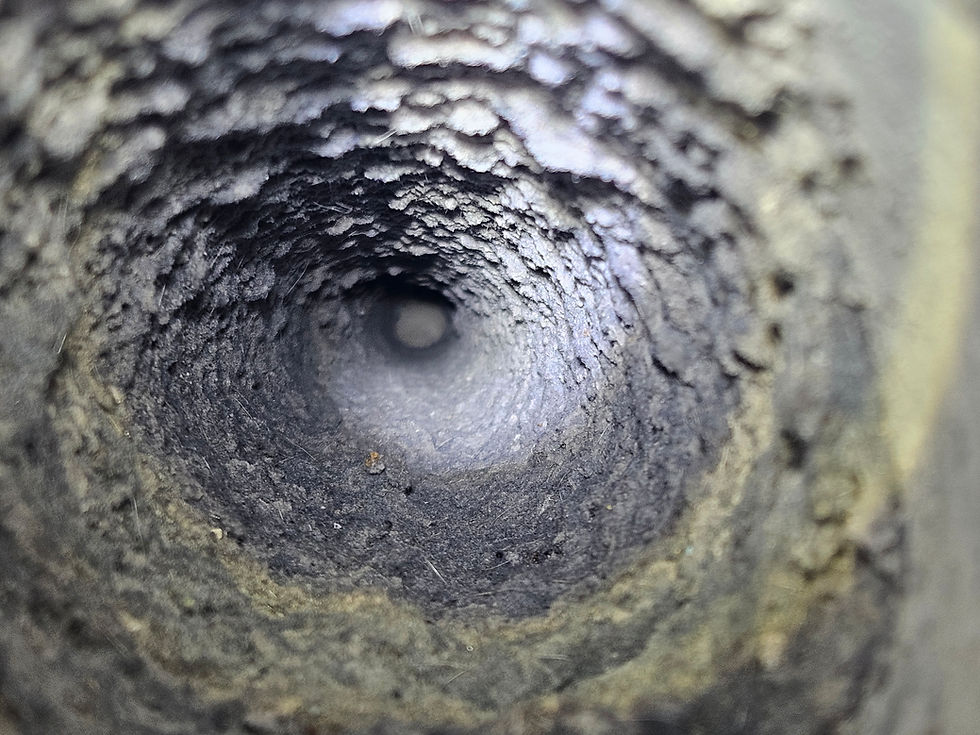
While cleaning your lint screen after every load is important, your lint screen isn't the entire dryer exhaust system. Some lint travels past the filter and into the vent, along with the hot air and water that need to exit your home.
Depending on your Plano home's layout, that vent may travel behind the dryer, through walls or ceilings, into an attic, and eventually through an exterior wall or the roof. In our experience providing dryer vent inspections in Plano since 2009, we find a majority of dryer vent termination points on the roof. Problems can occur anywhere along that path.
HomeSafe technicians may find issues such as:
Lint buildup
Crushed transition hoses
Disconnected ductwork
Improper vent materials
Excessive bends
Damaged or rusted ductwork
Bird or wildlife intrusion
Water or wet lint
Clogged roof terminations
Screens restricting exhaust
Some problems require cleaning; others require repair. That's why it's helpful to think of dryer vent maintenance as maintaining an entire exhaust system, rather than simply removing a pile of lint.
There's also a safety reason to keep it maintained. The U.S. Fire Administration reports that failure to clean was the leading factor contributing to ignition in 31% of home clothes-dryer fires from 2018–2020.
3. Look Behind Your Washing Machine
When was the last time you actually looked behind your washing machine?
For many homeowners, the answer is probably when it was installed.

Broken washing machine hoses are definitely something you want to avoid at all costs; broken hoses can release 10-12 gallons of water per minute (according to the North Texas Municipal Water District), leading to extensive damage if not fixed quickly. Let's skip that part, shall we? Take a flashlight and inspect the water-supply hoses and connections. Don't know what to look for?
Check for:
Cracks
Bulges
Corrosion
Rust
Moisture
Slow leaks
Loose connections
Significant deterioration
This is one of those checks HomeSafe technicians started paying closer attention to after noticing worn washer hoses while working behind customers' dryers. We realized how widespread this issue was in many Plano homes, so we officially added washer hoses as a part of our inspection.
It's not part of the dryer vent, but if we're already behind the appliances and notice something a homeowner might otherwise never see, it's worth pointing out.
A few minutes spent inspecting an appliance connection is much easier than cleaning up water damage.
4. Check Your HVAC Filter: Add the Next Change to Your Calendar
This one is simple, but it's also incredibly easy to forget. Time passes quickly and it can feel like you just did this task, when in reality it's long overdue! It's time to pull out your HVAC filter and check its condition.
How often the filter needs to be changed depends on factors such as the filter type, HVAC equipment, house and manufacturer's recommendations, so you'll need to figure out your own custom schedule.
Find out what your particular system requires and set a recurring reminder. While you're at it, make a list of the other filters around your home.
You may have filters in your:
Refrigerator
Range hood
Air purifier
Whole-home water system
Dehumidifier or humidifier
Having extra filters on hand for when the time comes can make this task feel easier to complete. Home maintenance becomes considerably easier when you stop expecting yourself to remember everything.
5. Look for Water Where Water Shouldn't Be
Small water problems have a habit of staying unnoticed because they're often happening where you don't regularly look.
It can be helpful to check before and after these items are used to compare the difference. Periodically check:
Under bathroom sinks
Under the kitchen sink
Around toilets
Behind the washing machine
Around the water heater
Near the refrigerator water line
Around windows
In the attic after severe weather
Pay attention to:
Water stains
Swollen cabinetry
Rust
Discoloration
Musty smells
Mold or mildew
Damp drywall
Peeling paint
The earlier you identify the source of moisture, the better. Water damage becomes exponentially more complicated to fix and more costly the longer it's left unchecked.
Also, don't overlook your dryer vent. A dryer removes a significant amount of moisture from wet laundry, and that moisture is supposed to leave your home through the exhaust system. If you're finding water or wet lint inside a dryer vent, it's important to determine why it's happening rather than simply removing the water and reconnecting everything. If you want to see an example of the type of water damage we have seen due to dryer vent issues, check out this video.
6. Check the Vents on the Outside of Your Home
Walk around your house and look at your exterior exhaust openings.
Depending on your home, you may have exhausts for:
Dryer
Bathrooms
Kitchen
Other ventilation systems
Look for damaged or missing covers, debris, obvious blockages, and signs of wildlife. DFW is known for its crazy hailstorms, so after a storm is a particularly important time to inspect exhaust openings, especially if they are on the roof.

Your dryer termination deserves particular attention because lint has to be able to exit. A screen might seem like a smart way to keep animals out, but a screen can catch lint and gradually restrict airflow, so they are generally not recommended.
7. Test Your Smoke and Carbon Monoxide Alarms
Do not sleep on checking your smoke and carbon monoxide alarms (literally)! Don't wait for that annoying chirp at 2 a.m. to remind you that your alarms exist. Neglecting these alarms can be deadly.
Test your smoke and carbon monoxide alarms according to the manufacturer's instructions and replace batteries or units when appropriate. It's also worth checking whether you actually have alarms where they're supposed to be.
Fire prevention isn't just one thing. It's a series of habits and constant vigilance to ensure your home is as safe as possible. Be mindful to ensure you have functioning alarms, appropriate appliance use, properly maintained electrical equipment, and routine cleaning of systems that can accumulate combustible material.
Dryer maintenance belongs on that list! USFA recommends cleaning the dryer's lint filter every time the dryer is used and cleaning the dryer vent ductwork annually.
8. Look at the Connections Behind Your Dryer
Checking out this area can be a challenge, especially if you've got tight quarters in your laundry room. Carefully look at the connection between your dryer and the wall.
The transition duct shouldn't be:
Crushed
Severely kinked
Torn
Disconnected, or
Compressed tightly behind the appliance
Pushing a dryer too close to the wall can compress some types of transition duct and interfere with airflow. The material of the hose is also important.
If you aren't sure whether your existing transition duct is appropriate for your dryer installation, that's something a professional can evaluate. This is also a good opportunity to vacuum accessible lint and dust around and underneath the appliances, without trying to access areas you don't feel comfortable with.
9. Pay Attention to What's Happening on Your Roof
There's more going on with your roof than you might realize. Depending on your home's design, it may contain terminations for multiple exhaust systems, including the dryer.
A damaged or poorly functioning dryer roof termination can create airflow problems even when the rest of the duct is relatively clean.

HomeSafe technicians encounter issues such as:
Lint accumulation around the termination
Flaps that don't operate properly
Improper screens
Wildlife intrusion
Damaged hoods
Terminations that unnecessarily restrict airflow, and
Occasionally, we find a dryer vent exhaust that has been completely covered and built over in error by roofers, completely trapping water and lint inside your home.
That doesn't mean you should grab a ladder and climb onto your roof to check it yourself.
If a component isn't safely accessible from the ground, leave the inspection to someone with the appropriate equipment and training. The important part for the homeowner is simply knowing where your dryer vent terminates. Many don't.
10. Pay Attention When Something Changes
This may be the most important maintenance habit on the entire list. You know what is “normal” for your Plano home. Pay attention when something changes.
A few things to look for:
The dryer suddenly takes longer
The HVAC runs differently
A room smells musty
You hear water running when nothing is on
A breaker starts tripping
An appliance becomes unusually hot
You discover unexplained moisture
A utility bill changes dramatically without an obvious explanation
Don't automatically assume the worst, but don't ignore it either. Homes frequently give us clues before something completely stops working.
What This Means for Plano Homeowners
Plano isn't the rapidly expanding outer suburb it once was.
As mentioned, a recent North Texas city comparison estimates Plano at 96% developed within its city limits, while the census estimates put Plano's population at 293,028 in 2025, with 112,438 households represented in the latest 2020–2024 household data. About 56.9% of occupied housing units are owner-occupied.
That creates an interesting shift.
For many Plano homeowners, the homeownership conversation isn't about buying into the newest development. It's increasingly about maintaining, updating, and protecting the homes and neighborhoods that are already here.
That requires looking beyond cosmetic projects and means focusing on function and safety to protect your investment in the long term. While performing and arranging maintenance for things like a properly functioning exhaust system hidden inside your walls isn't nearly as exciting, it should be at the top of your priority list.
What We See in Plano Homes
At HomeSafe, we're interested in more than whether there's lint inside a dryer vent.
We're trying to understand why the system is performing the way it is. That's why our technicians inspect the dryer vent system before recommending work.
Depending on the home and system, that can include evaluating:
Inside the dryer
Internal exhaust duct
Transition duct
Airflow
Duct condition
Vent material and configuration
Exterior or roof termination
Screens or other restrictions
Wildlife intrusion
Booster fans, when present
Problems beyond normal lint accumulation
Sometimes the answer is straightforward: the vent needs to be cleaned. Sometimes it isn't.
For example:
A clean vent with a crushed transition hose can still have an airflow problem.
Cleaning lint won't reconnect separated ductwork.
Cleaning alone won't correct an inappropriate roof termination.
And a new dryer won't fix an inefficient vent route hidden inside the house.
The goal should be to identify the actual problem and then determine the appropriate solution.
Why We Measure Airflow
A huge pile of lint makes for a satisfying before-and-after picture.
But it doesn't tell the whole story. Airflow measurement does. That's why airflow readings can be an important part of evaluating dryer vent performance. Before-and-after measurements can help show whether cleaning or other work actually improved the system's ability to exhaust air.
If airflow remains poor even after lint is removed, that tells us something important.
There may be another restriction or system issue worth investigating.
Homeowners deserve more information than, “We cleaned it, so it should be fine.”
Frequently Asked Questions About Preventative Maintenance for Older Plano Homes
What home maintenance should I do every year?
Annual maintenance varies by home and equipment, but homeowners should routinely consider HVAC service, roof and exterior inspections, appliance connections, smoke and carbon monoxide alarms, plumbing leaks, and exhaust systems. For dryers specifically, the U.S. Fire Administration recommends cleaning dryer vent ductwork every year.
How often should I have my dryer vent cleaned?
USFA recommends annual dryer vent ductwork cleaning. However, household size, laundry volume, pets, vent length, and configuration can affect how quickly lint accumulates or problems develop. If your dryer vent exhaust system is regularly cleaned and professionally optimized for maximum airflow, you may be able to go longer in between dryer vent cleaning services.
Why is my dryer suddenly taking two cycles?
Restricted airflow is one possible explanation. Lint buildup, a clogged exterior or roof termination, a crushed transition duct, wildlife intrusion, or other vent problems can interfere with exhaust. There are also appliance-related causes, so slower drying shouldn't automatically be blamed on the vent.
Does replacing my dryer mean I don't need the vent cleaned?
No. Your dryer and dryer vent are separate entities. Replacing the appliance doesn't remove lint from ductwork inside your home or correct a problem with the vent's routing, termination, or condition.
What should I look for in a dryer vent cleaning company in Plano?
Look for a company that evaluates the system rather than assuming every dryer problem requires the same service. Ask whether the technician evaluates airflow, the transition duct, ductwork condition, exterior or roof termination, and potential problems beyond lint. You should also ask if the company is fully insured and guarantees their work. HomeSafe meets all of these criteria.
Need Help With Your Dryer Vent in Plano, TX?
The best time to discover a problem with your home is usually before something breaks or causes damage to your home. HomeSafe helps Plano homeowners understand what's happening throughout their dryer vent system...not just remove lint.
Our technicians provide comprehensive dryer vent inspections, professional cleaning, airflow testing, repairs, roof termination solutions, transition duct upgrades, and dryer vent reroutes when needed.
We always inspect first, then show you what we find, and clearly explain your options so you can make an informed decision about your home. Our technicians do not work on comission, so you can feel secure that they are always recommending what is truly necessary.
HomeSafe Dryer Vent Cleaning
(214) 681-9848
Serving Plano and communities throughout the Dallas–Fort Worth metroplex.
P.S. Want to get your dryer vent cleaned for FREE? If you help coordinate a HomeSafe Good Neighbor Day for 5+ homes in your neighborhood, you can earn a FREE dryer vent cleaning, plus all your neighbors who participate will get 20% off their dryer vent cleaning, too!


Comments